Scrubber selection worksheet
Documents floor type, route length, soil category, water access, and preferred cleaning window before machine sizing.
Hako is presented here as an authority-led equipment partner for buyers who need more than a product brochure. The company story is about applied floor care knowledge: turning brush pressure, recovery airflow, hopper handling, tank hygiene, and operator behavior into machines that can be specified, serviced, and defended in procurement meetings.
Professional cleaning equipment should make facility work measurable: the right platform, the right maintenance routine, and the right evidence for every site that depends on clean floors.
Hako application engineering principle
The mission behind that principle is practical. Cleaning teams are asked to protect floor appearance, worker safety, public perception, and operating cost at the same time. A machine that cleans well in a demonstration can still become a weak fit if it is hard to rinse, poorly matched to the soil load, or unsupported when a shift-critical part wears out. Hako planning connects engineering detail with the realities of large buildings, public spaces, and industrial routes.
Application knowledge comes from repeated testing under conditions that resemble real facilities. Scrubbing, sweeping, pickup, turning, battery use, and service access are reviewed as connected systems rather than isolated specification lines.
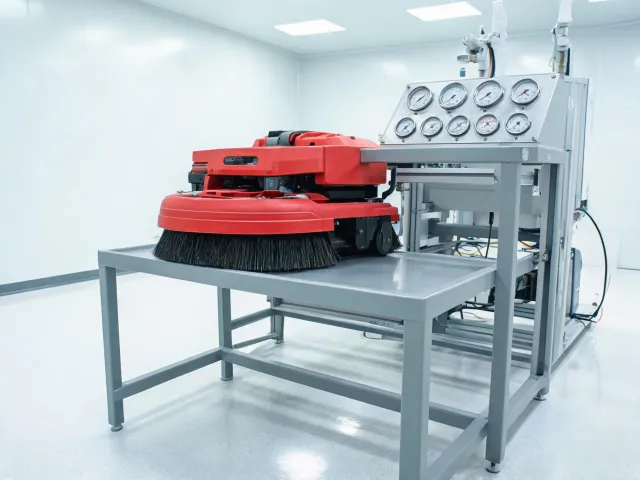
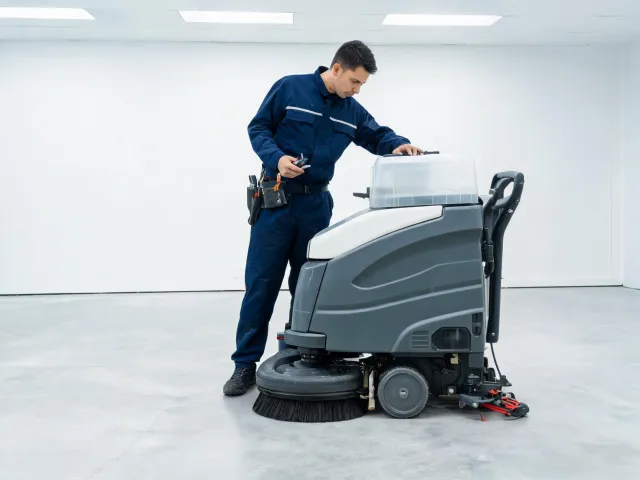
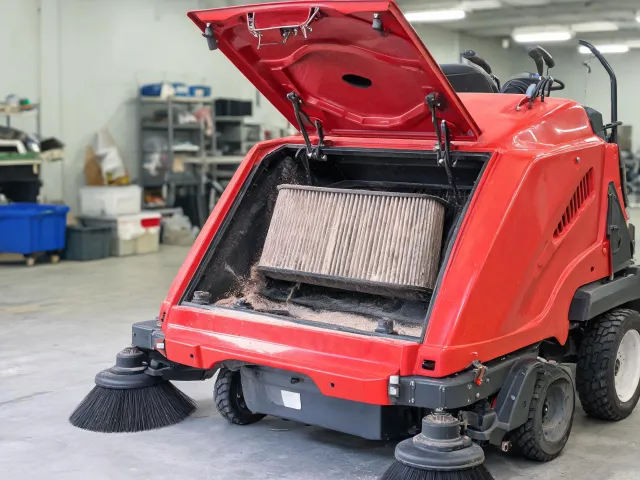
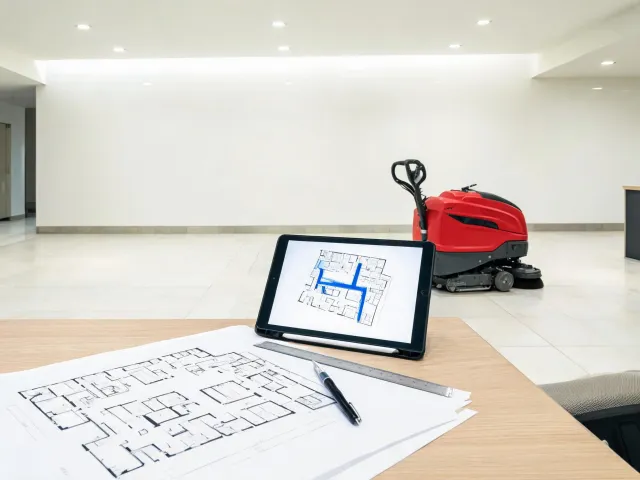
Authority is useful only when it becomes evidence. Hako buyers can prepare a stronger internal case by asking for documents that connect machine choice to floor condition, labor model, maintenance method, and expected service response.
Documents floor type, route length, soil category, water access, and preferred cleaning window before machine sizing.
Compares debris profile, hopper volume, filter maintenance, side broom reach, and indoor or outdoor operating boundaries.
Turns daily inspection, operator notes, charging routines, and dealer escalation into a repeatable document for supervisors.
An authority-led partner is most useful when it names the trade-offs and the limits, not only the strengths. These are the positions that shape a Hako recommendation before any machine is proposed.
Whether a floor needs sweeping, scrubbing, or both is decided before a model is named. A scrubber run over un-swept dry debris clogs recovery filters; the sequence is part of the specification, not an afterthought.
Battery removes the trailing lead but introduces a charge window; a cable machine runs continuously but is range-limited. The recommendation follows shift length, not a fixed preference.
Ride-on width only pays off on large open areas; in tight aisles or on weight-limited elevators a compact walk-behind is the engineering-correct choice even though it covers less per shift.
Send your facility context and the decisions you need to justify. Hako can help frame the technical comparison in a way that works for operations, purchasing, and service teams.