Warehouse and logistics
Wide aisles, dock plates, packaging debris, and long shifts often require ride-on scrubbers or sweepers with strong runtime planning and fast inspection.
Commercial floor care changes with the building. A logistics hub fights dock dust and tire marks, a retail chain needs quiet work before opening, a municipal fleet deals with mixed indoor and outdoor surfaces, and a food facility needs disciplined routines around hygiene-sensitive zones. Hako industry planning turns those differences into machine and service choices.
The same floor scrubber can look correct on paper and still fail in practice when an aisle is narrow, a dock is dusty, a public area has pedestrian traffic, or a shift leaves no time for tank service. These stories help define the machine brief before a quote is requested.
Wide aisles, dock plates, packaging debris, and long shifts often require ride-on scrubbers or sweepers with strong runtime planning and fast inspection.
Quiet work, polished floors, tight turns, and opening-hour deadlines call for compact machines with predictable pickup and easy operator handover.
Drainage, residue, cleaning chemistry, and hygiene routines make tank access and documented rinsing as important as the visible cleaning pass.
Depots, workshops, stations, and public venues need robust sweepers and scrubbers that can move between mixed surfaces and operator teams.
Metal dust, forklift traffic, production schedules, and safety rules require a practical split between dry sweeping and wet scrubbing.
Application gains are rarely just about a larger machine. They come from choosing the correct cleaning method, positioning service tasks at the right moment, and making the operator routine simple enough to repeat across shifts.
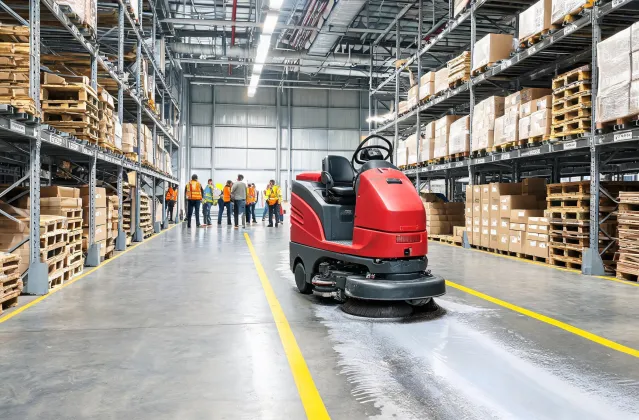
A warehouse team separates dry sweeping before dock opening from wet scrubbing after traffic peaks, reducing repeated passes on the same aisle.
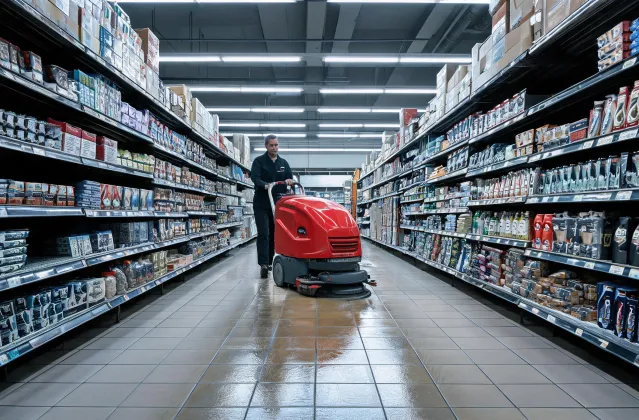
A store group standardizes tank rinsing and squeegee checks so overnight operators leave a clean, dry entrance before morning traffic.
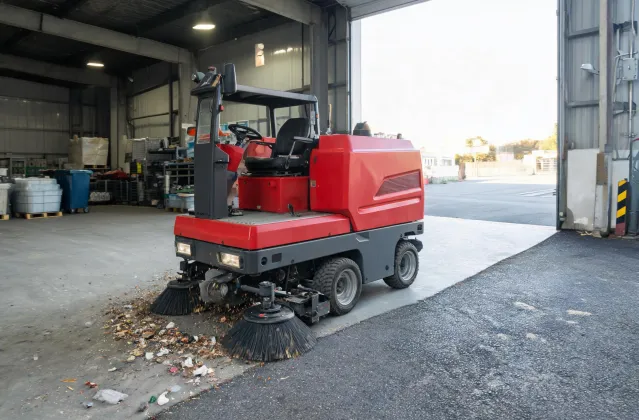
A depot combines sweeper dust control with scheduled scrubber work, giving supervisors one documented route for yards and indoor bays.
The right brief often depends on a trade-off rather than a single best machine. This comparison lays out where sweeping, scrubbing, or a combined route fits each environment, and what the operator gives up either way.
| Environment | Lead method | Trade-off to weigh |
|---|---|---|
| Warehouse and logistics | Sweep dry debris first, then ride-on scrub on traffic-polished aisles. | Ride-on width raises productivity but needs turning room and a charge window; a single scrub pass alone clogs on dock grit. |
| Retail and public buildings | Compact walk-behind scrubbing in quiet hours. | Walk-behind maneuvers in tight aisles but covers less area per shift than a ride-on, so the opening deadline limits floor size. |
| Food support areas | Scrubbing with documented tank rinsing and controlled dosing. | Higher hygiene discipline and tank access matter more than raw speed; under-dosing leaves residue, over-dosing leaves film. |
| Municipal and manufacturing | Robust sweeper for mixed surfaces plus scheduled scrubber work. | One machine rarely covers yard grit and indoor polish; splitting dry and wet work adds a unit but cuts repeated passes. |
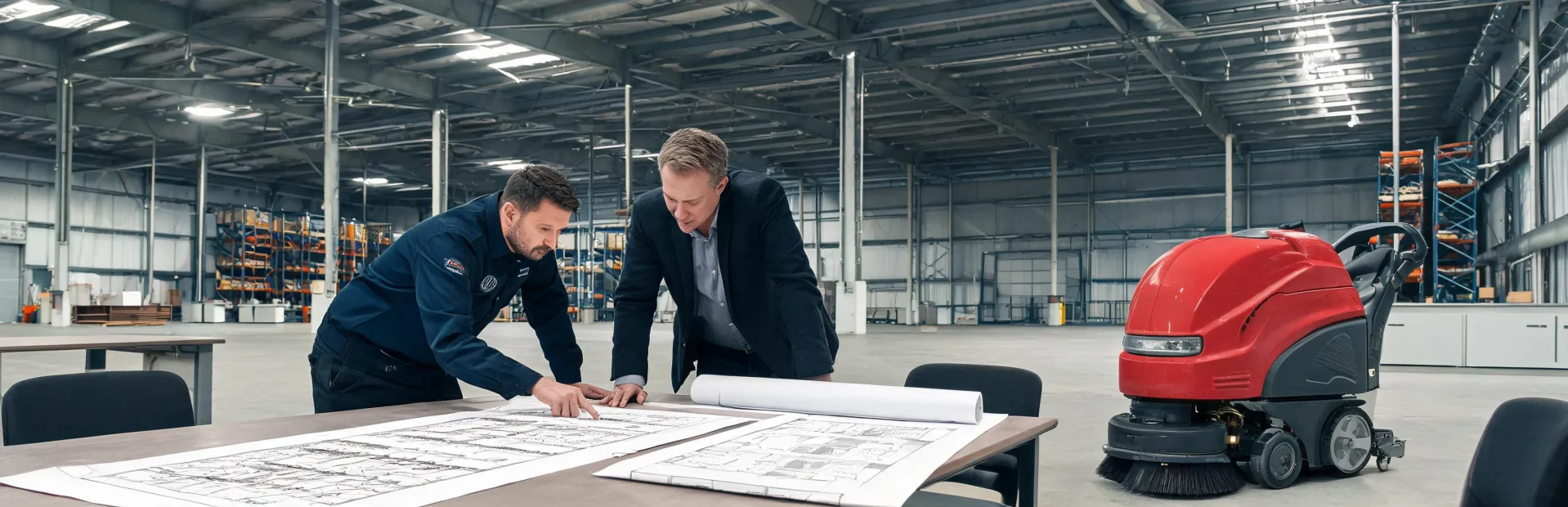
Tell us where the floor is, what soil appears during the day, and who owns the cleaning shift. The right machine brief starts with those details.