Application audit
Review floor materials, debris profile, water access, routes, elevators, turning zones, and cleaning frequency before confirming machine class.
Service decisions decide whether a scrubber earns its place after the purchase order is signed. Hako support planning looks at operator routines, dealer access, consumable wear, charging rhythm, and cleaning windows so the machine program fits the facility instead of forcing the facility to adapt around the machine.
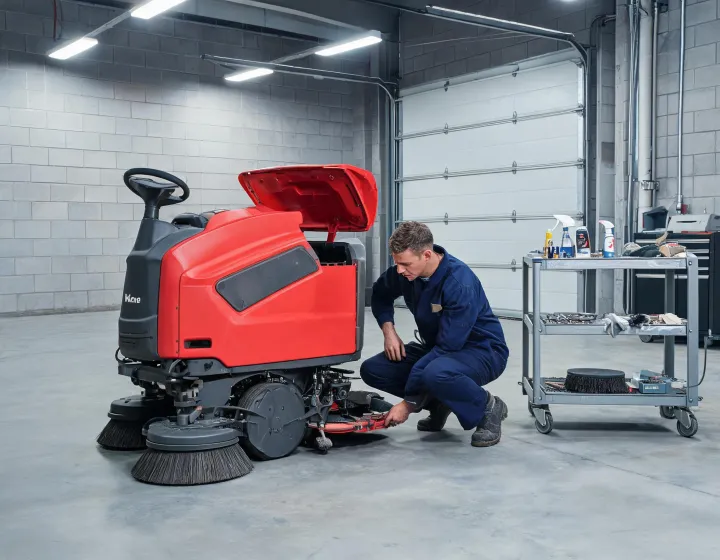
Every building has a different tolerance for downtime. A grocery chain may need silent overnight response, a warehouse may need parts staged near the dock, and a campus may need training that survives seasonal staff turnover. Hako service conversations begin with that operating risk before any maintenance interval is recommended.
Review floor materials, debris profile, water access, routes, elevators, turning zones, and cleaning frequency before confirming machine class.
Document charging, tank rinsing, brush inspection, and daily checks so supervisors can audit the process without relying on memory.
Align squeegees, brushes, filters, and side brooms with actual surface conditions to avoid a false economy on consumables.
Define who handles urgent stops, planned inspections, seasonal demand, and dealer escalation before a cleaning route is disrupted.
A service plan becomes useful when it answers the practical questions an operator faces at 5 a.m. or after a busy public event. The points below are deliberately operational because cleaning equipment failures rarely begin with one dramatic fault; they usually start with a missed rinse, a worn blade, a wrong brush, or a battery routine that never matched the shift.
Unstructured maintenance often looks cheaper because the costs are scattered across supervisors, night crews, purchasing, and emergency calls. A guided service plan pulls those costs into one visible routine, which makes decisions easier to defend and failures easier to trace.
A service program is engineering, not a warranty against every fault. Stating the boundaries keeps expectations aligned and helps the facility decide where in-house routines end and dealer support begins.
Where two service routes are both valid, the plan states the trade-off: a longer interval lowers cost but raises the chance of an unplanned stop on a heavily loaded route, while a tighter interval raises consumable spend but protects uptime. The right point depends on the cost of downtime for that specific site.
Send floor area, working hours, debris type, and current machine pain points. A specialist can help separate product choice from service design so the fleet is easier to run after commissioning.